Free guide
GHS pictograms and what each one means
The nine GHS hazard pictograms (hazard symbols), the hazard classes and categories each one covers under UN GHS Rev.11, the signal word for each category, and how OSHA, EU CLP, WHMIS and NOM-018 differ. Each hazard statement links to its wording, by jurisdiction, in our H and P statement lookup, with the source cited on each page.
The nine hazard pictograms
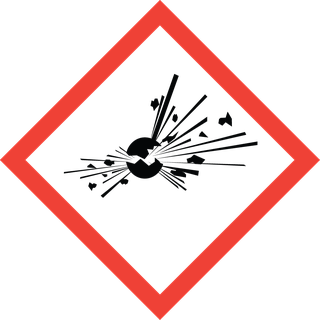 GHS01
Exploding bomb
Explosives, Self-reactive substances and mixtures, Organic peroxides
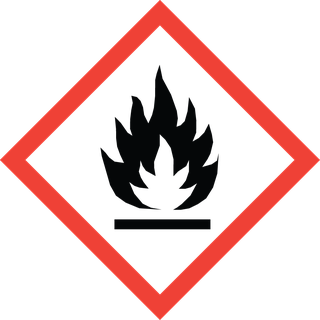 GHS02
Flame
Flammable gases, Aerosols, Chemicals under pressure and 9 more
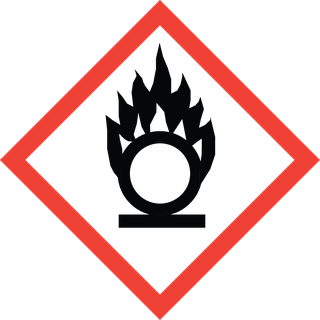 GHS03
Flame over circle
Oxidizing gases, Oxidizing liquids, Oxidizing solids
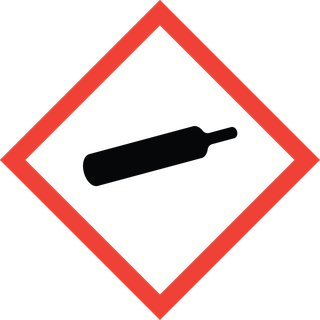 GHS04
Gas cylinder
Gases under pressure, Chemicals under pressure
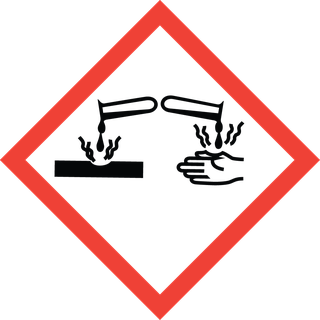 GHS05
Corrosion
Corrosive to metals, Skin corrosion/irritation, Serious eye damage/eye irritation
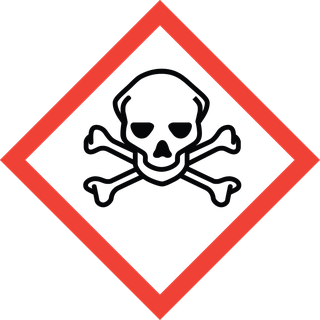 GHS06
Skull and crossbones
Acute toxicity
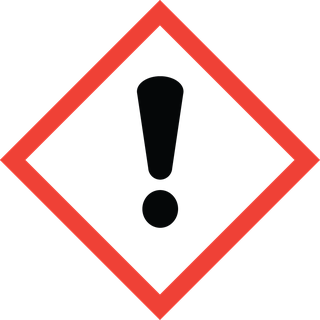 GHS07
Exclamation mark
Explosives, Acute toxicity, Skin corrosion/irritation and 5 more
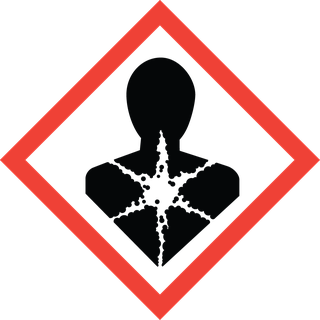 GHS08
Health hazard
Respiratory sensitization, Germ cell mutagenicity, Carcinogenicity and 3 more
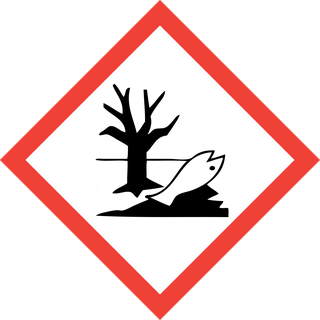 GHS09
Environment
Hazardous to the aquatic environment
Names and codes: UN GHS Rev.11, Annex 3, Table A3.4.1. Images: US OSHA pictogram files (public domain in the US).
Which jurisdictions use each pictogram
| Pictogram | US OSHA | EU CLP | Canada WHMIS | Mexico NOM-018 |
|---|---|---|---|---|
| GHS01 Exploding bomb | Yes | Yes | Yes | Yes |
| GHS02 Flame | Yes | Yes | Yes | Yes |
| GHS03 Flame over circle | Yes | Yes | Yes | Yes |
| GHS04 Gas cylinder | Yes | Yes | Yes | Yes |
| GHS05 Corrosion | Yes | Yes | Yes | Yes |
| GHS06 Skull and crossbones | Yes | Yes | Yes | Yes |
| GHS07 Exclamation mark | Yes (optional for HNOC) | Yes | Yes | Yes |
| GHS08 Health hazard | Yes | Yes | Yes | Yes |
| GHS09 Environment | No | Yes | No | No |
| Biohazardous infectious materials (Canada only) | No | No | Yes (black circle border) | No |
“Yes” means the jurisdiction's regulation includes the pictogram. Which categories get it can still differ, because each one follows a different GHS edition: OSHA primarily Rev.7, Canada Rev.7 (Rev.8 for chemicals under pressure), Mexico the 5th revised edition. The EU text does not name one revision.
Precedence rules: when one pictogram replaces another
UN GHS Rev.11, 1.4.10.5.3.1
- For substances and mixtures covered by the UN Model Regulations, precedence of symbols for physical hazards follows the Model Regulations. In workplace settings the competent authority may require all physical hazard symbols.
- If the skull and crossbones applies, the exclamation mark should not appear.
- If the corrosive symbol applies, the exclamation mark should not appear where it is used for skin or eye irritation.
- If the health hazard symbol appears for respiratory sensitization, the exclamation mark should not appear where it is used for skin sensitization or for skin or eye irritation.
US OSHA, Appendix C, C.2.1 and C.2.3.4
- If the skull and crossbones is included, the exclamation mark shall not appear where it is used for acute toxicity.
- If the corrosive pictogram is included, the exclamation mark shall not appear where it is used for skin or eye irritation.
- If the health hazard pictogram is included for respiratory sensitization, the exclamation mark shall not appear where it is used for skin sensitization or for skin or eye irritation.
- A pictogram may appear only once on a label.
EU CLP, Article 26(1)
- (a) If GHS01 applies, GHS02 and GHS03 are optional, except where more than one of them is compulsory.
- (b) If GHS06 applies, GHS07 shall not appear.
- (c) If GHS05 applies, GHS07 shall not appear for skin or eye irritation.
- (d) If GHS08 applies for respiratory sensitisation, GHS07 shall not appear for skin sensitisation or for skin and eye irritation.
- (e) If GHS02 or GHS06 applies, GHS04 is optional.
Canada HPR, s. 3.6(3)
- If the skull and crossbones is required, the exclamation mark for acute toxicity does not apply.
- If the corrosion symbol is required, the exclamation mark for skin or eye irritation does not apply.
- If the health hazard symbol is required for respiratory sensitization, the exclamation mark for skin sensitization or skin or eye irritation does not apply.
Mexico NOM-018-STPS-2015, 10.6
- The exclamation mark is not used for health hazards when the skull and crossbones is used; when corrosion is used for skin or eye irritation; or for respiratory sensitization, even if the product is also a skin sensitizer or skin or eye irritant (as worded in 10.6).
Border, color and size
- UN GHS: a black symbol on a white background with a red frame, in a square set at a point. For packages that will not be exported, the competent authority may allow a black border (1.4.10.4.2.3). The code (GHS01 and so on) is for reference only and should not appear on labels or in SDS Section 2 (1.4.10.4.3). Where a transport pictogram appears, a GHS pictogram for the same hazard should not (1.4.10.5.1).
- US OSHA, on shipped container labels: square set at a point, black symbol, white background, red frame sufficiently wide to be clearly visible; a red frame with no symbol is not permitted (C.2.3.1, (f)(1)). Workplace labels may use other formats ((f)(6)(ii)). Where a DOT pictogram appears on a shipped container, the HCS pictogram for the same hazard is not required (1910.1200(f)(5)(iii)).
- EU CLP: square set at a point, black symbol, white background, red frame (Annex I, 1.2.1.1 to 1.2.1.2). Each pictogram must cover at least 1/15 of the label area for the Article 17 information, and at least 1 cm² (1.2.1.3), with minimum sizes by package volume (Table 1.3). Where an outer package carries transport labels for the same hazard, the CLP pictogram need not appear on it (Article 33).
- Canada: an exact reproduction of the Schedule 3 pictogram, black symbol on white with a red border, square set on a point (s. 3.1(a)). The Biohazardous Infectious Materials pictogram is the exception: black symbol on white with a black circular border (s. 3.1(b)). A label pictogram is not required if its symbol already appears on a Transportation of Dangerous Goods label on the container and that TDG label also meets s. 3.5 (s. 5.10), and an outer container with a TDG label needs no HPR label (s. 5.2(b)).
- Mexico: a diamond with a red border resting on a point, black symbol on white. A black border may replace the red one when the signage is used internally in the workplace (Appendix B, B.3). Table B.2 sets minimum sizes by viewing distance.
Categories with no pictogram
In UN GHS Rev.11 these categories carry a signal word and hazard statement but no symbol. Self-reactive substances and organic peroxides of Type G have no label elements at all. Not every jurisdiction adopts these categories.
| Hazard class | Category | Signal word | Hazard statements |
|---|---|---|---|
| Flammable gases (ch. 2.2) | Category 2 | Warning | |
| Aerosols (ch. 2.3.1) | Category 3 | Warning | |
| Flammable liquids (ch. 2.6) | Category 4 | Warning | |
| Acute toxicity (oral, dermal, inhalation) (ch. 3.1) | Category 5 | Warning | |
| Skin corrosion/irritation (ch. 3.2) | Category 3 | Warning | |
| Serious eye damage/eye irritation (ch. 3.3) | Category 2B | Warning | |
| Reproductive toxicity, effects on or via lactation (ch. 3.7) | Additional category | No signal word | |
| Hazardous to the aquatic environment, short-term (acute) (ch. 4.1) | Categories 2, 3 | No signal word | |
| Hazardous to the aquatic environment, long-term (chronic) (ch. 4.1) | Categories 3, 4 | No signal word |
UN GHS Rev.11, Annex 3 section 3; chapters 2.8 and 2.15 for Type G.
Other cases with no pictogram, by jurisdiction:
- Explosives of Divisions 1.5 and 1.6: no pictogram under OSHA (Appendix C.4.14, as corrected at 91 FR 562, 577 to 581) or in the EU (CLP Annex V, 1.6). Mexico's Table B.3 gives the exploding bomb only for unstable explosives and Divisions 1.1 to 1.4.
- Combustible dusts and simple asphyxiants: the signal word Warning and no symbol under Canada's HPR (Schedule 5) and under OSHA's Appendix C.
Download the pictogram files
Each pictogram page links to the OSHA files (EPS vector and PNG). OSHA publishes them as a US government work, which is not subject to US copyright (17 U.S.C. 105). The UN also publishes the GHS pictograms as GIF and EPS on unece.org. Canada's Biohazardous Infectious Materials pictogram is in Schedule 3 of the Hazardous Products Regulations; we do not host a copy.